Advertencia: Esta historia contiene detalles perturbadores.
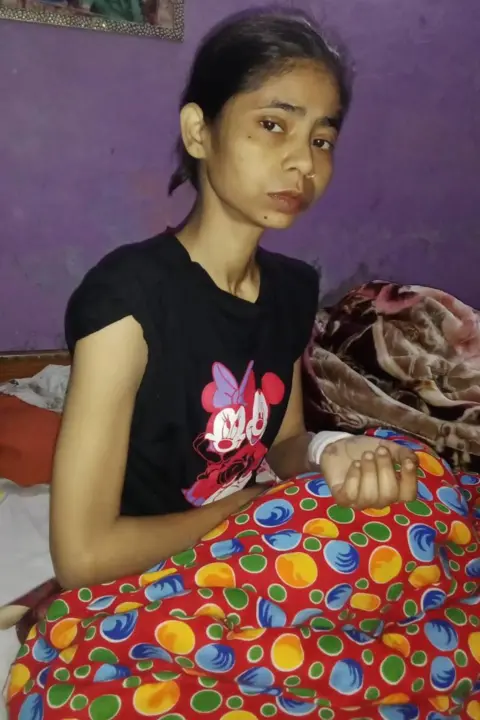
Una sobreviviente a la que ha estado ayudando es Ruman*, quien alega que su esposo la golpeó y la obligó a beber ácido durante un episodio de violencia doméstica en 2019.
El presunto incidente le provocó graves lesiones internas y un esófago dañado que tuvo que ser reconstruido artificialmente para que pudiera comer.
A pesar de años de tratamiento, Ruman tiene dificultades para tragar y come poco. A sus 28 años, pesa solo 21 kg, menos que el peso promedio de una niña de ocho años. Tareas básicas como ir al baño la agotan y necesita supervisión médica constante.
Pero a pesar de su grave situación, Ruman no puede reclamar la compensación y los beneficios de rehabilitación que la ley de discapacidad de la India permite a los sobrevivientes de ataques con ácido.
En diciembre, Shaheen presentó una petición a la Corte Suprema diciendo que la ley de discapacidad también debe incluir a sobrevivientes como Ruman.
Para los sobrevivientes de la ingestión forzada de ácido, la desfiguración es interna y, por lo tanto, menos evidente. Pero sus vidas son extremadamente difíciles, ya que les resulta difícil respirar, hablar y tragar alimentos a pesar de las numerosas cirugías, afirma.
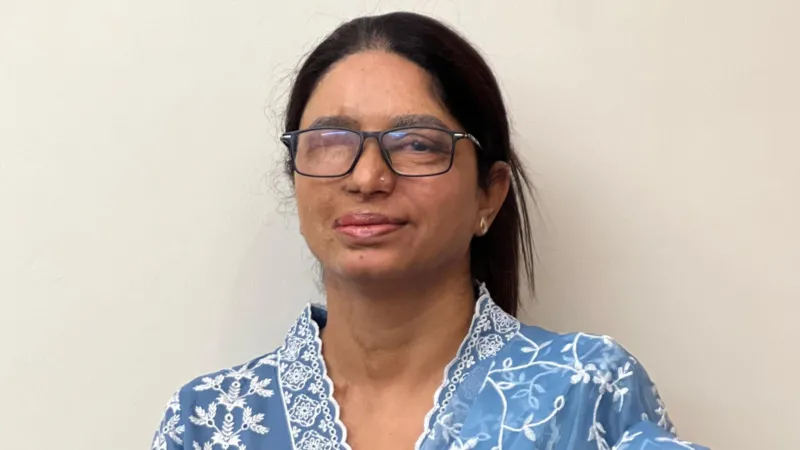
Malik, de 42 años, lleva más de una década luchando por los derechos de los supervivientes de ataques con ácido. Su determinación por ayudar a los demás parece provenir de los desafíos que ha enfrentado como superviviente.
Se sometió a 25 cirugías y perdió la visión en su ojo izquierdo después de ser atacada con ácido afuera de su lugar de trabajo en el estado norteño de Haryana en 2009. Malik tenía 20 años en ese momento y trabajaba como consejera estudiantil.
Durante 16 años, libró una batalla legal para llevar a sus agresores ante la justicia antes de que un tribunal los absolviera en diciembre. Malik dice estar devastada, pero no derrotada, y ha impugnado el veredicto.
«Luché por justicia para mí. Pero ahora lucho por el bien de otros sobrevivientes y víctimas de abuso. Quiero que mi caso sea un ejemplo de justicia, que los perpetradores no queden impunes y que asuman las consecuencias de sus actos», afirma.
 Shaheen Malik
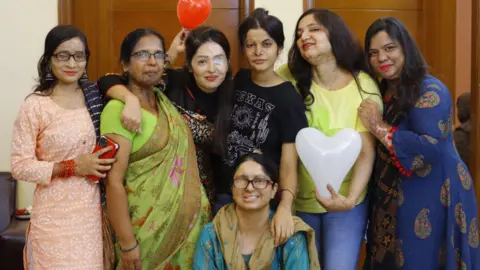
En 2021, Malik, junto con Laxmi Agarwal, otra superviviente de un ataque con ácido, fundó la Fundación Almas Valientes, una organización sin ánimo de lucro que ofrece asistencia legal y económica a supervivientes de ataques con ácido. La fundación actúa como un salvavidas para quienes han sido marginados por la sociedad y sus familias y no tienen adónde acudir en busca de ayuda.
Alrededor de 50 sobrevivientes viven en el hogar de acogida de la fundación en el barrio de Jangpura, Delhi, donde reciben atención y asistencia. Ruman se encuentra entre ellos, ya que no quiere ser una carga para sus padres, quienes son mayores y luchan por llegar a fin de mes, dice Malik.
The foundation is also helping Ruman fight her case after her husband appealed against his conviction in a higher court and was released on bail last year.
Malik says she and Ruman are among hundreds of survivors who are fighting an uphill battle for justice. The conviction rate in acid attack cases is abysmally low with cases languishing in courts for years.
A 2024 report which analysed data from 2017-2021 found that from the 600 cases pending trial in 2021, only 15 were disposed off by courts.
This trend is confirmed by by the latest National Crime Records Bureau (NCRB) report, which shows that of the 703 cases pending trial in 2023, only 43 were disposed off, with convictions in 16.
Meanwhile, the number of acid attack cases in the country have been rising – NCRB recorded 176 in 2021, 202 in 2022 and 207 in 2023.
Last month, while hearing Malik’s petition, the Supreme Court directed all states to furnish a yearly report of acid attacks, cases disposed off and those pending in courts, as well as rehabilitation schemes offered to victims. It also sought details of victims forcefully made to ingest acid.
Strongly condemning acid attacks, the judges called for «extraordinary punitive measures», including auctioning the assets of attackers to compensate their victims.
The court also asked the federal government to consider «legislative interventions», like shifting the burden of proof on to the accused from the victim.
While Malik welcomes the top court’s observations and directions, she says that along with sprucing up laws, there’s an urgent need to ensure their proper implementation.
 Shaheen Malik
She points out that acid attack survivors still struggle to get affordable medical care even though private and public hospitals are legally mandated to provide free treatment to them, including reconstructive surgeries.
«Many private hospitals refuse to admit acid attack survivors until they are furnished with a court order, delaying life-saving treatment to victims,» she says.
«And even after they are admitted, hospitals make the patient wait for long hours to receive treatment and often, discontinue it mid-way by making excuses,» she adds.
She also questions why it remains so easy to buy acid despite the increase in cases and existing regulations around over-the-counter sale of the substance.
«A single incident alters our whole life. We are treated like outcasts by society and face so many difficulties. Shouldn’t the government do more to prevent more people from suffering the same fate as us?» Malik says.
Malik is intimately acquainted with the stigma and social isolation she talks about.
Hace unos meses, Malik cuenta que le dijeron que trasladara la oficina de su fundación sin darle ninguna razón. Dice que lleva semanas buscando un nuevo lugar, pero no lo ha encontrado.
Mucha gente piensa que nosotros [los sobrevivientes de ataques con ácido] podemos traerles buena suerte. Algunos se sienten incómodos al ver nuestras caras. Por eso, muchos no quieren alquilarnos una vivienda, dice.
Pero Malik dice que no se rendirá y seguirá luchando por un espacio para personas como ella en la sociedad.